GoSeeKorea · Practical trip tools
Korean food photo guide
Recognise Korean dishes through real food photographs, ingredient notes and serving explanations.
← All trip toolsExplore each dish, its ingredients and how it is served. Photographs illustrate the food; a restaurant’s preparation and portion size may differ.

Small, unfilled rice rolls come with spicy squid salad and radish kimchi on the side. The rolls are mild by themselves; alternating them with the accompaniments balances salt and heat. They are a complete meal, not ordinary gimbap with missing fillings.
Plain rice rolls in laver, spicy squid salad, radish kimchi
EBS · KOGL Type 1 ↗

Ripe, sour kimchi is simmered with ingredients such as pork and tofu. The cooking draws meat fat and seasoning into the broth and softens the cabbage. Pork, canned tuna and saury versions differ, so the meat or fish named on the menu matters.
Aged kimchi, pork or tuna, tofu
한국농수산식품유통공사 · KOGL Type 1 ↗

Slender acorn-jelly pieces sit in broth with kimchi and laver, with rice alongside. Smooth jelly contrasts with crisp kimchi. Both chilled summer bowls and warm versions exist; mukbap does not automatically mean cold soup.
Acorn jelly, rice, kimchi, laver, anchovy stock or radish-kimchi broth
향긋한 커피매니아 · CC BY 4.0 ↗

Noodles sit in chilled broth beneath radish, cucumber and egg. Some bowls arrive with slushy ice. Broths range from meat-forward to sharply refreshing with radish-water kimchi, so two bowls labeled mul naengmyeon can taste quite different.
Buckwheat or starch noodles, chilled meat or radish-kimchi broth, radish, cucumber, egg
Korea.net / Korean Culture and Information Service · CC BY-SA 2.0 ↗
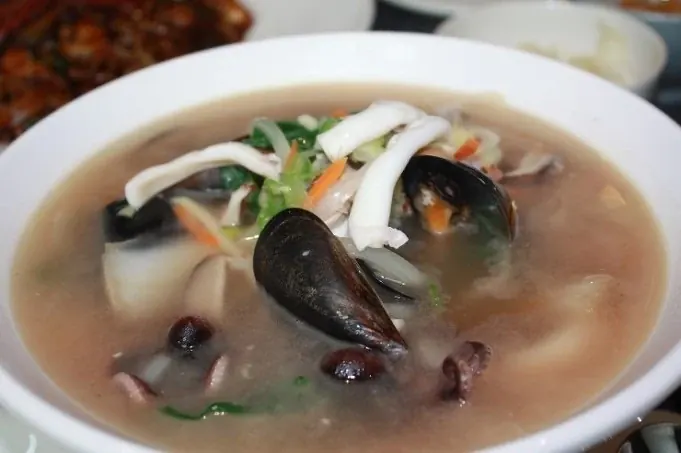
Seafood and vegetables are cooked in a starch-thickened broth poured over wheat noodles. Egg adds soft ribbons. Unlike red jjamppong, chili is not the defining flavor; the thick soup coats the noodles rather than flowing like a clear udon broth.
Wheat noodles, shrimp or squid, vegetables, egg, stock, starch
Galaxea · CC BY 4.0 ↗

Thin beef slices are marinated in a sweet-savory soy mixture. Seoul-style servings can be brothy, while Eonyang-style meat is grilled more dryly on a grate. Ordering bulgogi does not always mean cooking it yourself at the table.
Thinly sliced beef, soy sauce, sugar, pear or onion, garlic, scallion, sesame oil
Debbie Tingzon · CC BY 2.0 ↗

Large beef ribs are opened into broad sheets of meat and grilled in the Suwon style. Wang emphasizes size. Salt-seasoned traditions coexist with soy-marinated menus, so distinguish saeng from yangnyeom when choosing.
Large beef ribs, salt or soy-based seasoning, garlic, scallion
ayustety (a flickr user) · CC BY-SA 2.0 ↗
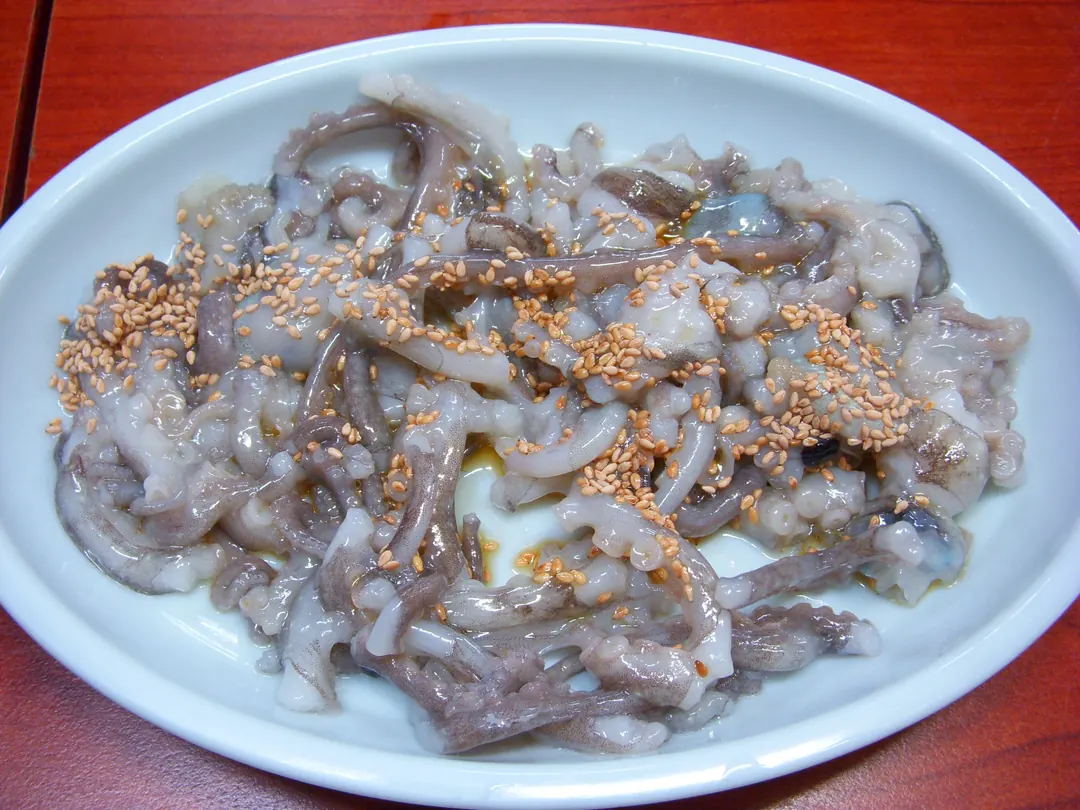
Freshly cut raw octopus pieces may still move through residual nerve activity. Their suckers can cling, producing an unusual texture. Sesame oil and salt accompany the dish, but it is not an easy or suitable choice for everyone.
Freshly cut raw long-arm octopus, sesame oil, salt, sesame seeds
by LWY at flickr · CC BY 2.0 ↗
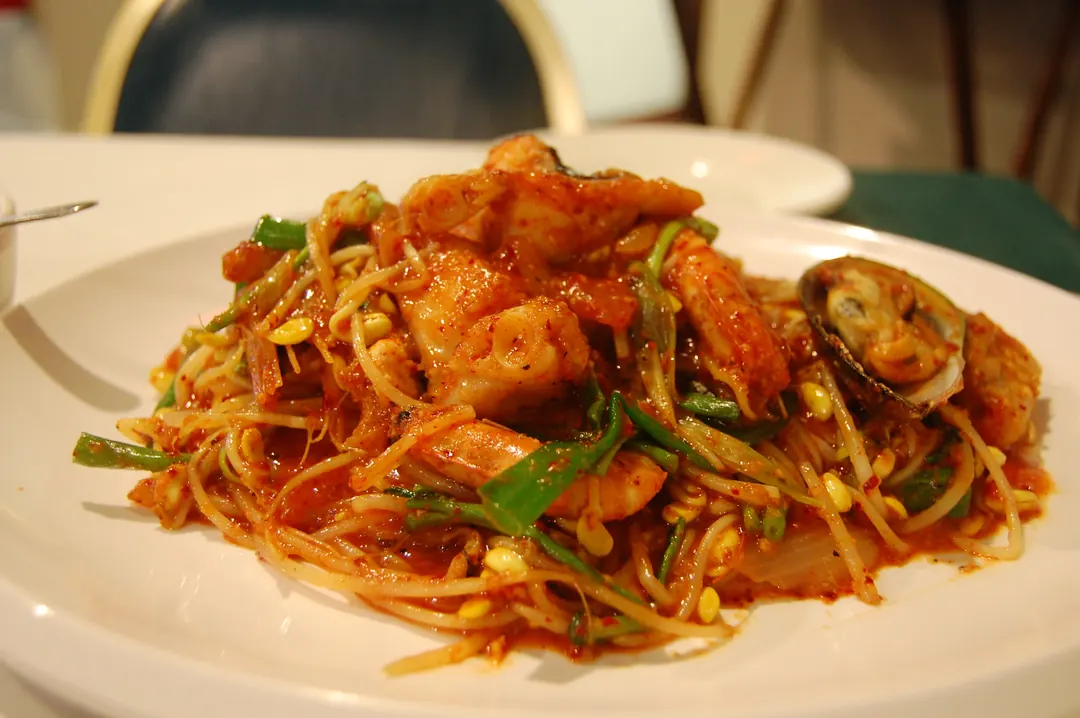
Monkfish and bean sprouts are cooked in a thick chili sauce with water parsley. White flesh, elastic skin and crisp sprouts provide contrasting textures. The platter contains bony and skin-on pieces, not only fillets.
Monkfish, bean sprouts, water parsley, chili powder, garlic, starch
stu_spivack · CC BY-SA 2.0 ↗
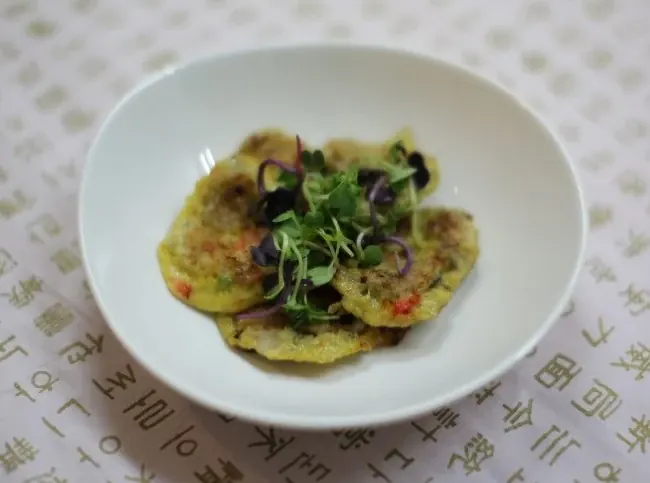
Oysters receive a thin flour-and-egg coating and are pan-fried. The light covering preserves their shape and moist flesh rather than forming a thick fritter. Pieces may be individual oysters or small clusters, served with soy-vinegar dip.
Oysters, wheat flour, egg, salt, cooking oil
Dr 방원장 · CC BY 4.0 ↗
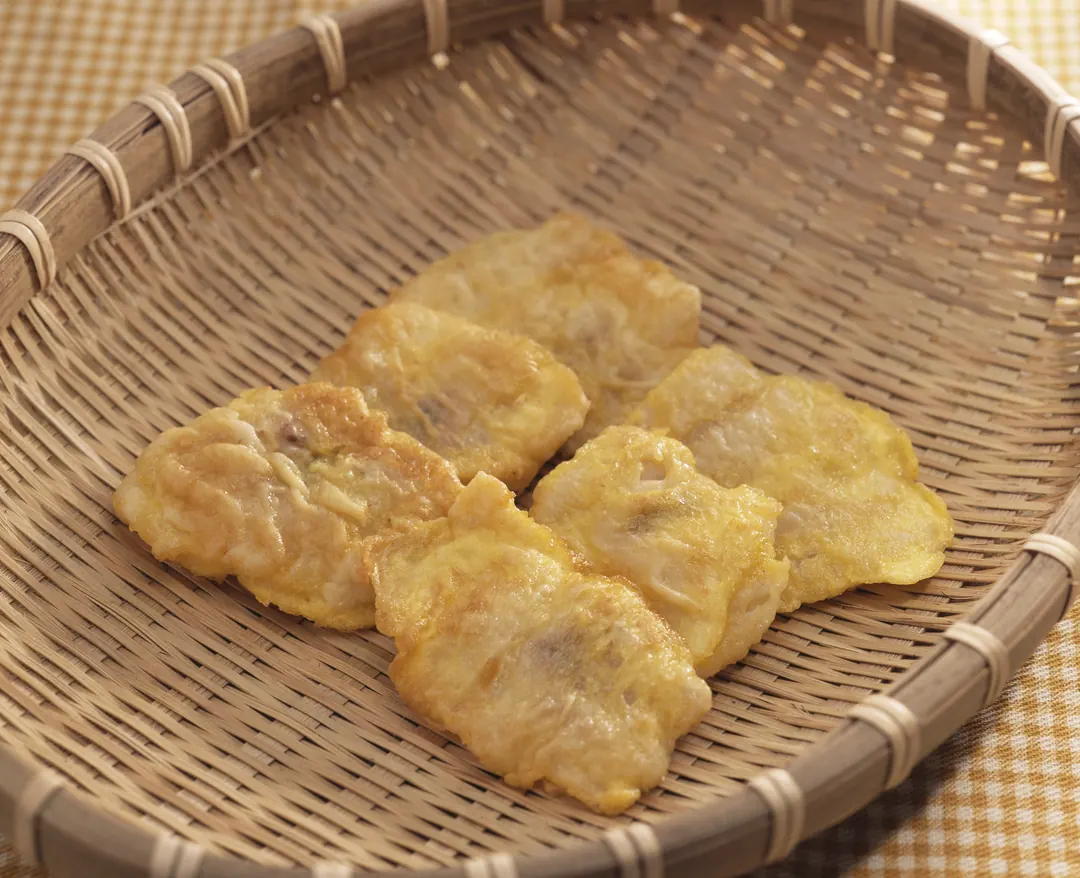
Thawed pollock fillets are coated lightly in flour and egg, then pan-fried. White flaky fish sits inside a yellow egg layer rather than a thick fried crust. It is a familiar fish jeon in holiday assortments.
Thawed pollock fillet, wheat flour, egg, salt, pepper, oil
wizdata · CC0 ↗
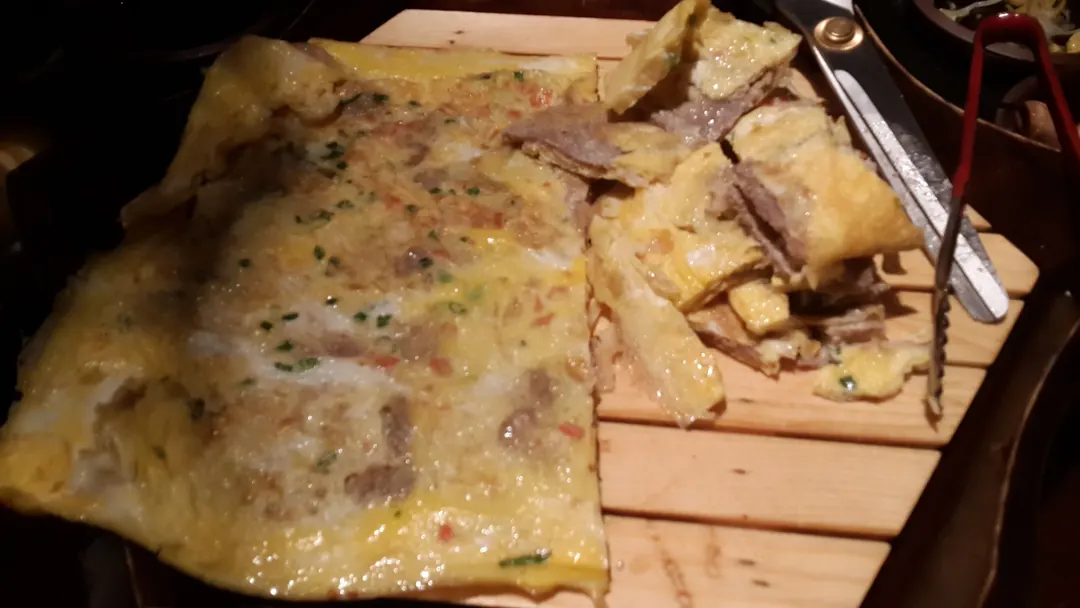
Thin beef slices are coated in flour and egg and pan-fried. Unlike a minced-meat patty, each piece retains the grain of one slice. Soft beef and egg are paired with scallion salad or dipping seasoning.
Thin beef slices, wheat flour, egg, salt, pepper, oil
Mar del Este · CC BY-SA 4.0 ↗

Soybeans are cooked, then glazed with soy sauce and sugar or syrup. Black skins can hide yellow or green interiors, depending on the bean. The texture ranges from firm and chewy to soft enough to crush, and a small spoonful goes with rice.
Black soybeans or other soybeans, soy sauce, sugar or syrup and sesame seeds
Hyeon-Jeong Suk · CC BY 2.0 ↗
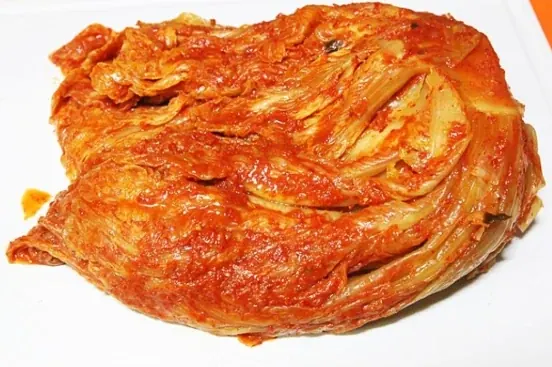
Long aging gives this kimchi a pronounced sourness and fermented aroma. Its leaves are softer than freshly made kimchi. It can be served as a side, but slow braising with pork is another common way to use its deep flavor.
Long-aged napa cabbage kimchi; seasoning may include chili, garlic and fermented seafood
푹푹이 · CC BY 4.0 ↗
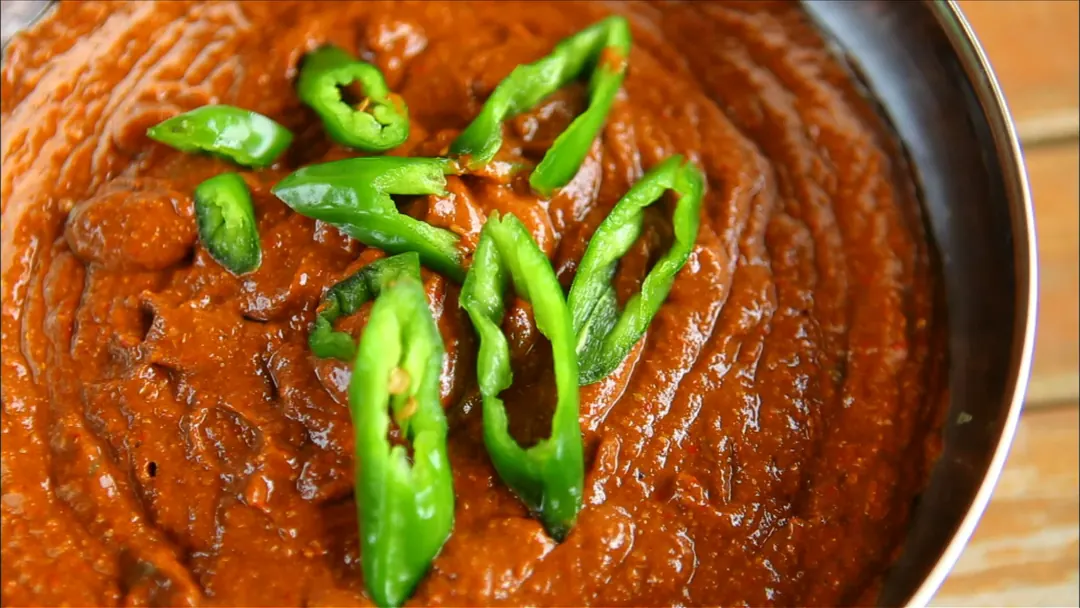
Ssamjang is a thick condiment for rice or meat wrapped in leaves. Soybean paste provides the base, with chili paste, garlic and sesame oil adding flavor. Chopped onion, nuts or tofu can alter both its texture and saltiness.
Soybean paste, chili paste, garlic and sesame oil; optional onion, nuts or tofu
EBS · KOGL Type 1 ↗

Rice cake sticks are stir-fried with beef, mushrooms and vegetables in soy seasoning. There is no red pool of chili sauce; the cakes take on the flavor of the meat and soy sauce. It is generally mild, but commonly contains beef and wheat-containing soy sauce.
Rice cake sticks, beef, shiitake mushrooms, vegetables, soy sauce and sesame oil
jetalone (a flickr user) · CC BY 2.0 ↗

Small sausages alternate with chewy rice cakes on a cooked skewer. The contrast is between salty sausage and mild, springy cake. “So” abbreviates sausage here; it does not mean the snack contains only beef.
Rice cakes, small sausages, oil and a chili-paste or ketchup-based sauce
Ajumeoni · CC0 ↗

Hotba is a handheld snack bar, often made from springy fish paste. Vegetables, squid or cheese may be mixed in before frying or baking. The name can also appear on meat-based products, so read the ingredient description.
Fish paste, starch or flour and vegetables; optional cheese, shrimp or sausage
Sous Chef · CC BY 2.0 ↗

Sweet cooked red beans top finely shaved ice. Milk ice gives a soft, snow-like texture, while water ice has a cleaner crunch. Rice cakes and condensed milk are common additions, and a bowl may be sized for sharing.
Shaved water or milk ice, sweet red beans and rice cake; optional condensed milk
국립국어원 · CC BY-SA 2.0 kr ↗
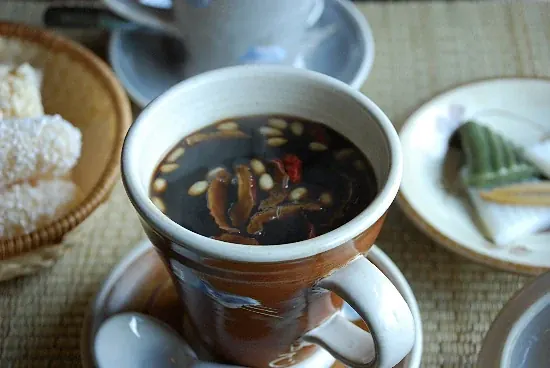
A blend of herbal ingredients makes a dark, strongly aromatic drink. It can be slightly bitter or sweetened to balance the flavor. Generous chestnut, jujube and pine-nut toppings can make it as much a spoonable snack as a tea.
A blend of herbal ingredients, ginger and jujube; toppings may include chestnuts, pine nuts, ginkgo or egg yolk
허수자 · CC BY 2.0 kr ↗

Rice flour is steamed and pounded, then cut or pressed with a patterned stamp. The smooth, springy surface usually has no powder coating. White and mugwort versions are common, with sesame oil helping keep pieces apart.
Rice flour, water, salt and sesame oil; optional mugwort
EBS · KOGL Type 1 ↗
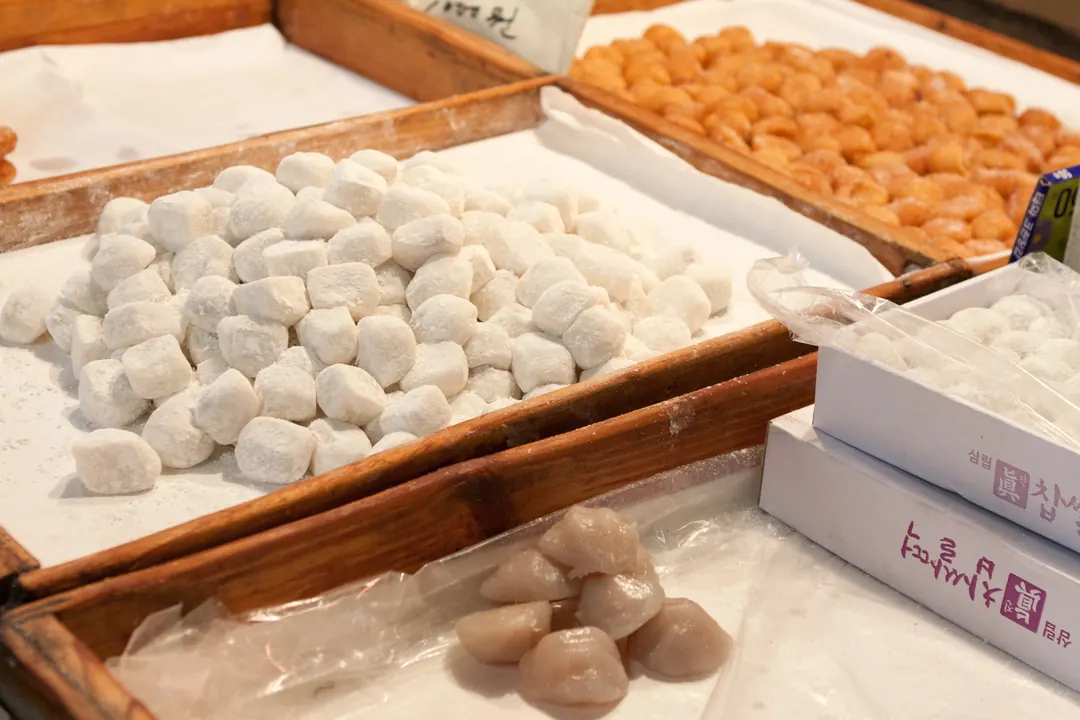
The common filled form has a stretchy sticky-rice wrapper around sweet red-bean paste. Powder keeps the outside from sticking. Cream- and fruit-filled versions differ from the basic bean-filled cake, including in their storage needs.
Sticky-rice flour, sweet red-bean paste and sugar; variants may contain mugwort, cream or fruit
Jirka Matousek · CC BY 2.0 ↗
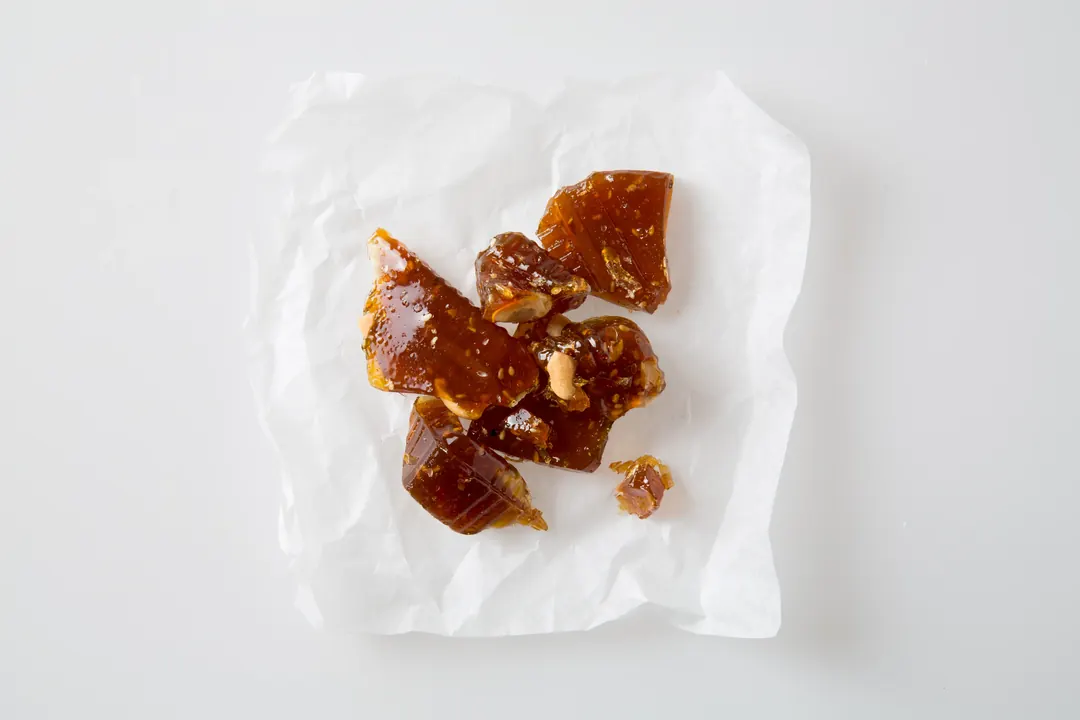
Malt converts grain starch into sugars, which are then concentrated. A softer syrup remains pourable, while further reduction produces sticky or hard candy. Pulling the candy introduces air and can turn it paler.
Rice or other starchy grains, barley malt and water
국립국어원 · CC BY-SA 2.0 kr ↗
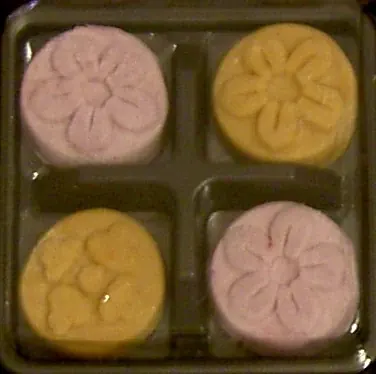

Thin dough is slit, twisted, fried and coated with syrup. The ribbon-like shape is lighter and crisper than dense yakgwa. Ginger or cinnamon adds fragrance, and colored dough can create a varied assortment.
Flour, ginger water, frying oil and sugar syrup; optional cinnamon or pine nuts
삼삶스토리 · CC BY 4.0 ↗

Cooked and dried sticky-rice dough expands when fried, then receives a sweet coating and puffed grains. The airy interior breaks easily beneath the textured surface. It is much lighter than its size suggests.
Sticky-rice flour, frying oil, grain syrup or honey and puffed-rice coating
abex · CC BY-SA 2.0 ↗
See every dish and its ordering notes →