
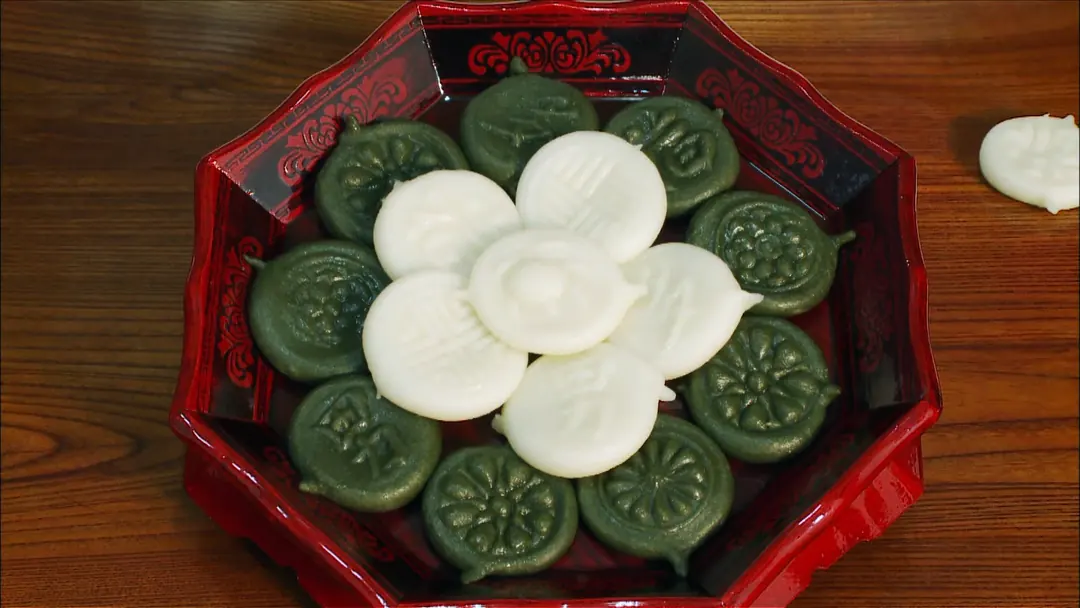
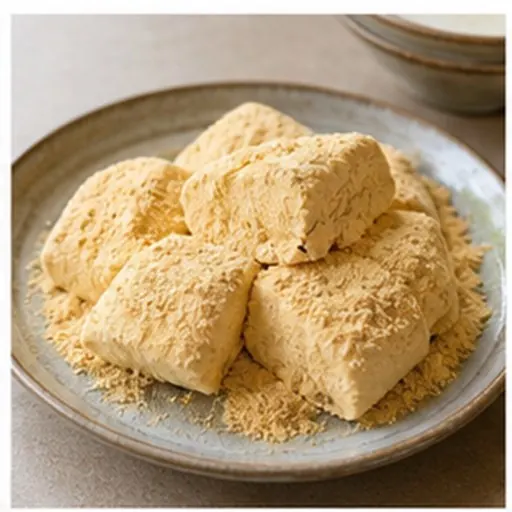
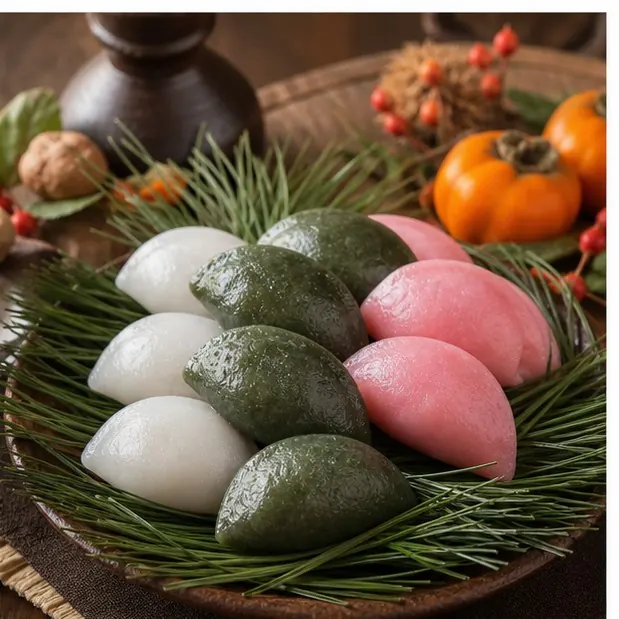
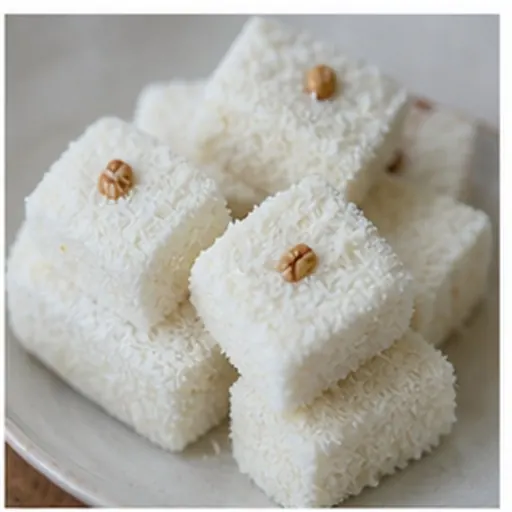
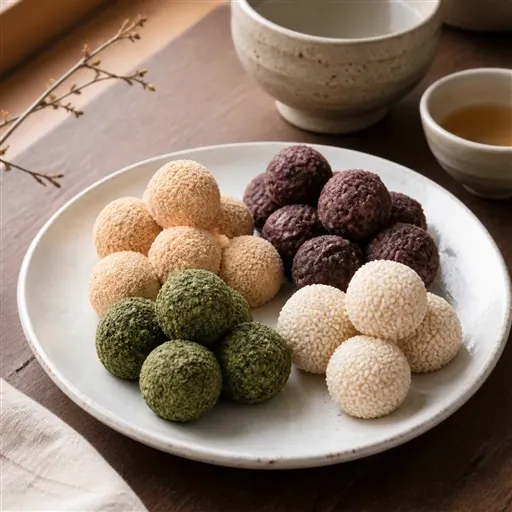
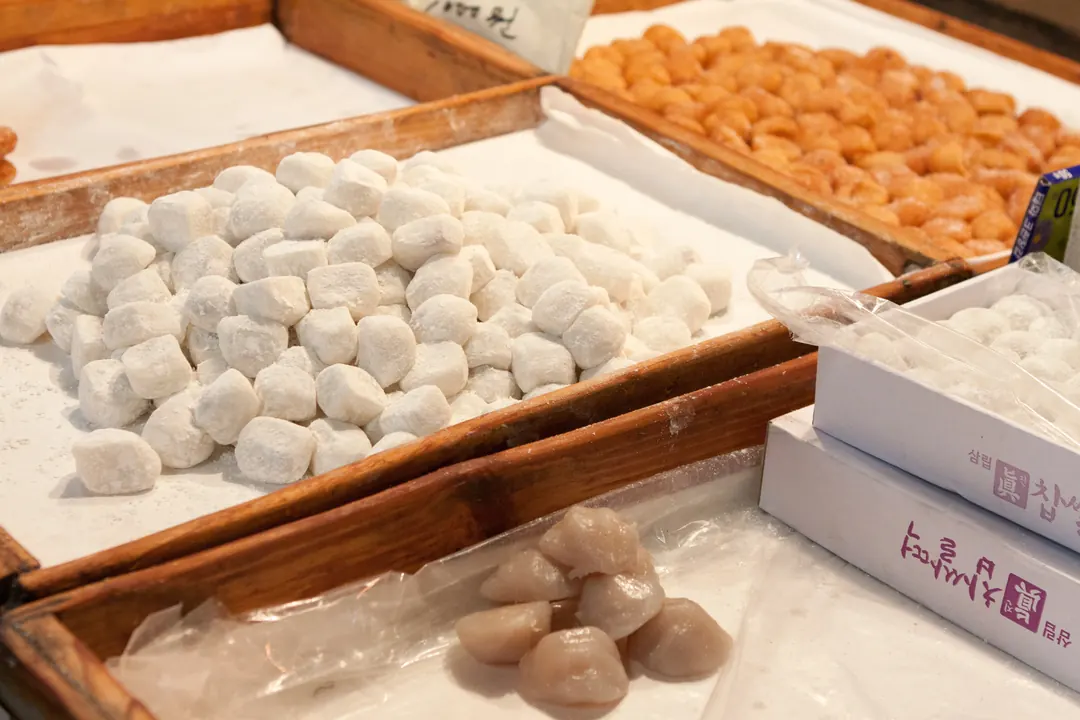
Photograph of Jeolpyeon
EBS · KOGL Type 1

절편 · Jeolpyeon

Jeolpyeon

절편

What exactly is it?

Rice flour is steamed and pounded, then cut or pressed with a patterned stamp. The smooth, springy surface usually has no powder coating. White and mugwort versions are common, with sesame oil helping keep pieces apart.

Main ingredients

Rice flour, water, salt and sesame oil; optional mugwort

Ordering and serving

Plain jeolpyeon is mild, though honey or grain syrup may accompany it. Sesame oil can be present even without visible seeds.

Origins and changes

Rice-cake stamps made from wood, ceramic and other materials create flowers, characters and geometric patterns. The patterned surface is part of the food’s presentation.

Sources checked

Related foods

How do similar dishes compare?

Choose a dish to compare ingredients, flavor and serving style side by side.

Dish to compare

Jeolpyeon

절편

Main ingredients
Rice flour, water, salt and sesame oil; optional mugwort
Flavor and character
Rice flour is steamed and pounded, then cut or pressed with a patterned stamp. The smooth, springy surface usually has no powder coating. White and mugwort versions are common, with sesame oil helping keep pieces apart.
How to eat it
Plain jeolpyeon is mild, though honey or grain syrup may accompany it. Sesame oil can be present even without visible seeds.
Read about this dish →

Injeolmi

인절미

Main ingredients
Sticky rice, salt and soybean, red-bean or mung-bean coating; optional mugwort
Flavor and character
Steamed sticky rice is pounded, cut and coated with soybean powder or another grain coating. The flavor comes from the outside rather than a filled center. Stretchy rice cake contrasts with the loose powder, and mugwort makes a green version.
How to eat it
Chew one small piece thoroughly. Avoid taking a large mouthful of sticky cake and dry powder at once.
Read about this dish →
Find nearby food places →

Check the restaurant’s actual menu for the dish you want.