
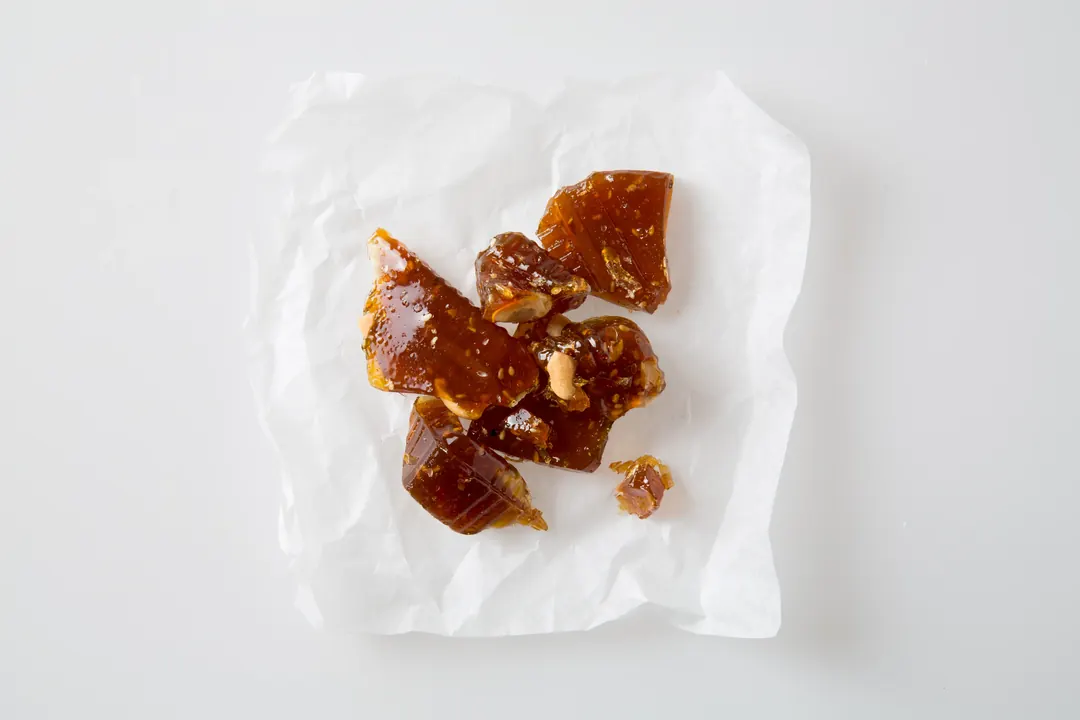
Photograph of Yeot
국립국어원 · CC BY-SA 2.0 kr

엿 · Yeot

Yeot

엿

What exactly is it?

Malt converts grain starch into sugars, which are then concentrated. A softer syrup remains pourable, while further reduction produces sticky or hard candy. Pulling the candy introduces air and can turn it paler.

Main ingredients

Rice or other starchy grains, barley malt and water

Ordering and serving

Let a small piece soften rather than immediately biting hard candy. Its stickiness can be awkward with dental restorations.

Origins and changes

It is one way of obtaining sweetness from grain rather than refined sugar. The result serves both as candy and as a binder or sweetener for other confections.

Sources checked

Related foods

How do similar dishes compare?

Choose a dish to compare ingredients, flavor and serving style side by side.

Dish to compare

Yeot

엿

Main ingredients
Rice or other starchy grains, barley malt and water
Flavor and character
Malt converts grain starch into sugars, which are then concentrated. A softer syrup remains pourable, while further reduction produces sticky or hard candy. Pulling the candy introduces air and can turn it paler.
How to eat it
Let a small piece soften rather than immediately biting hard candy. Its stickiness can be awkward with dental restorations.
Read about this dish →

Gangjeong

강정

Main ingredients
Depending on style: sticky-rice dough or roasted grains, sesame or nuts, with grain syrup
Flavor and character
Gangjeong can mean more than one texture. Traditional puffed sticky-rice sweets have an airy center; yeot-gangjeong binds seeds, beans or nuts with syrup into a dense brittle. Check which form is being sold.
How to eat it
Dense seed or nut bars can be quite hard. Ask for the airy puffed style if you want a lighter bite.
Read about this dish →
Find nearby food places →

Check the restaurant’s actual menu for the dish you want.