
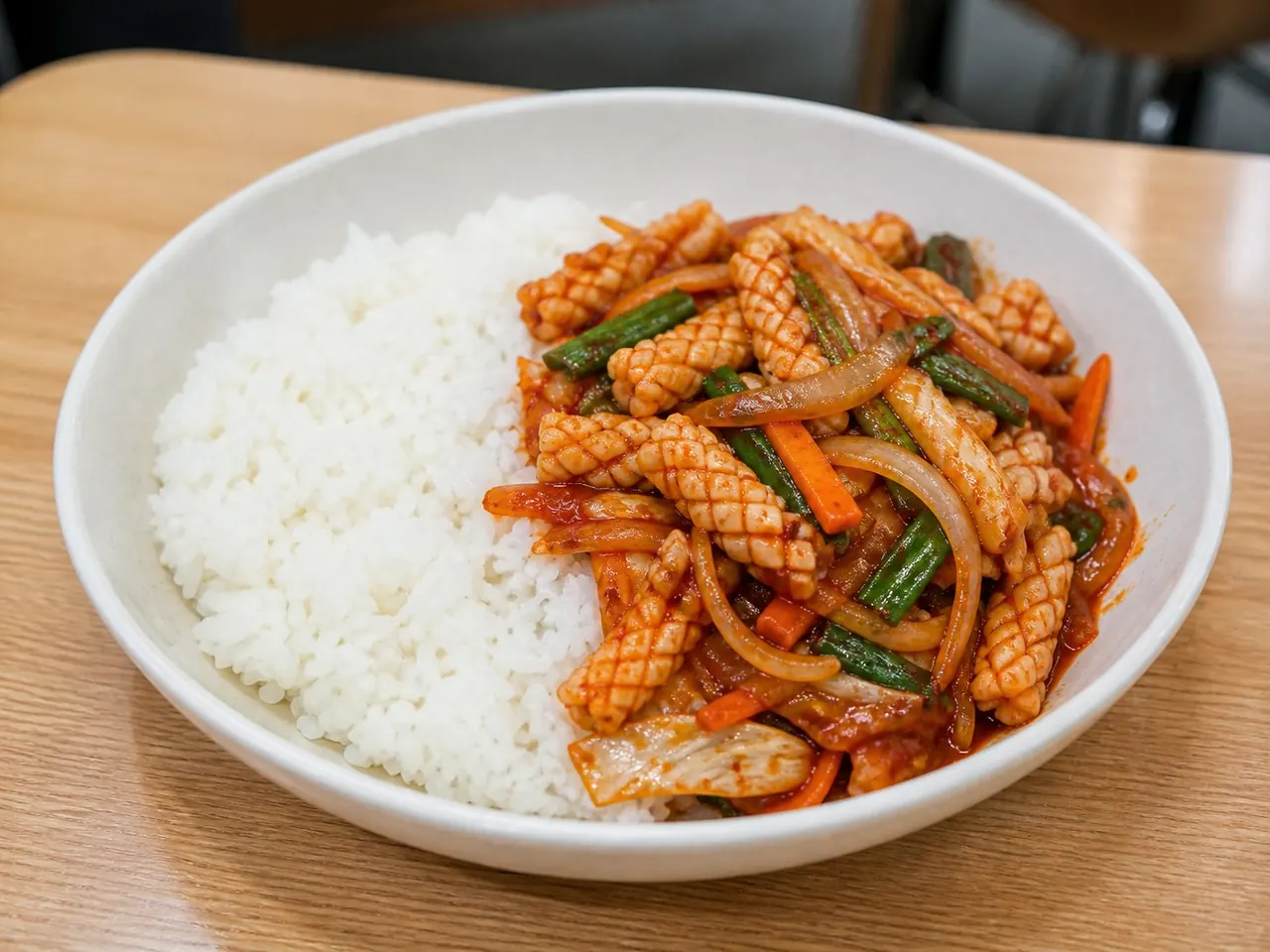
Ojingeo-deopbap with spicy stir-fried squid, onion and green onion beside white rice

오징어덮밥 · Ojingeo deopbap

Ojingeo deopbap

오징어덮밥

What exactly is it?

Ojingeo-deopbap tops steamed rice with squid cut into bite-size pieces and quickly stir-fried with onions, green onions and a sweet-spicy gochujang and gochugaru sauce. Both body and tentacle pieces provide a springy chew; brief high-heat cooking helps prevent toughness. Bean sprouts and shredded laver are not defining garnishes.

Main ingredients

Squid, rice, onion, green onion, vegetables such as carrot or cabbage, gochujang, gochugaru, soy sauce, garlic

Ordering and serving

Ask for long tentacle pieces to be cut if needed. The spicy sauce soaks into the rice, so ask about a milder preparation before cooking rather than after it is served.

Origins and changes

This turns ojingeo-bokkeum into an individual meal by placing the cooked stir-fry over rice. Its distinction from a shared squid plate is mainly the serving format, not a separate origin recipe. Unlike raw-seafood rice bowls, its squid is cooked.

Sources checked

Related foods

How do similar dishes compare?

Choose a dish to compare ingredients, flavor and serving style side by side.

Dish to compare

Ojingeo deopbap

오징어덮밥

Main ingredients
Squid, rice, onion, green onion, vegetables such as carrot or cabbage, gochujang, gochugaru, soy sauce, garlic
Flavor and character
Ojingeo-deopbap tops steamed rice with squid cut into bite-size pieces and quickly stir-fried with onions, green onions and a sweet-spicy gochujang and gochugaru sauce. Both body and tentacle pieces provide a springy chew; brief high-heat cooking helps prevent toughness. Bean sprouts and shredded laver are not defining garnishes.
How to eat it
Ask for long tentacle pieces to be cut if needed. The spicy sauce soaks into the rice, so ask about a milder preparation before cooking rather than after it is served.
Read about this dish →

Hoe-deopbap

회덮밥

Main ingredients
Rice, raw fish, lettuce, perilla leaves, cucumber, vinegared gochujang
Flavor and character
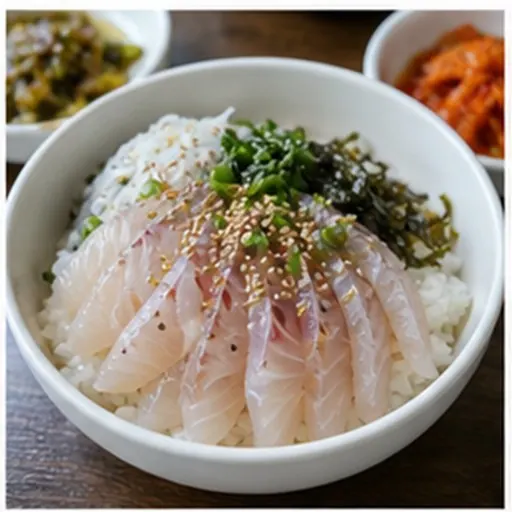
Raw fish and crisp vegetables are mixed with rice and sweet-tart vinegared gochujang. The texture comes from uncooked lettuce, perilla and cucumber rather than seasoned, cooked namul. The fish is raw, and the species depends on the restaurant and supply.
How to eat it
If rice arrives separately, add it to the fish-and-vegetable bowl. Add the sauce a little at a time. If you need to avoid raw fish, choosing an explicitly cooked dish is clearer than assuming the topping can be cooked on request.
Read about this dish →
Find nearby food places →

Check the restaurant’s actual menu for the dish you want.