
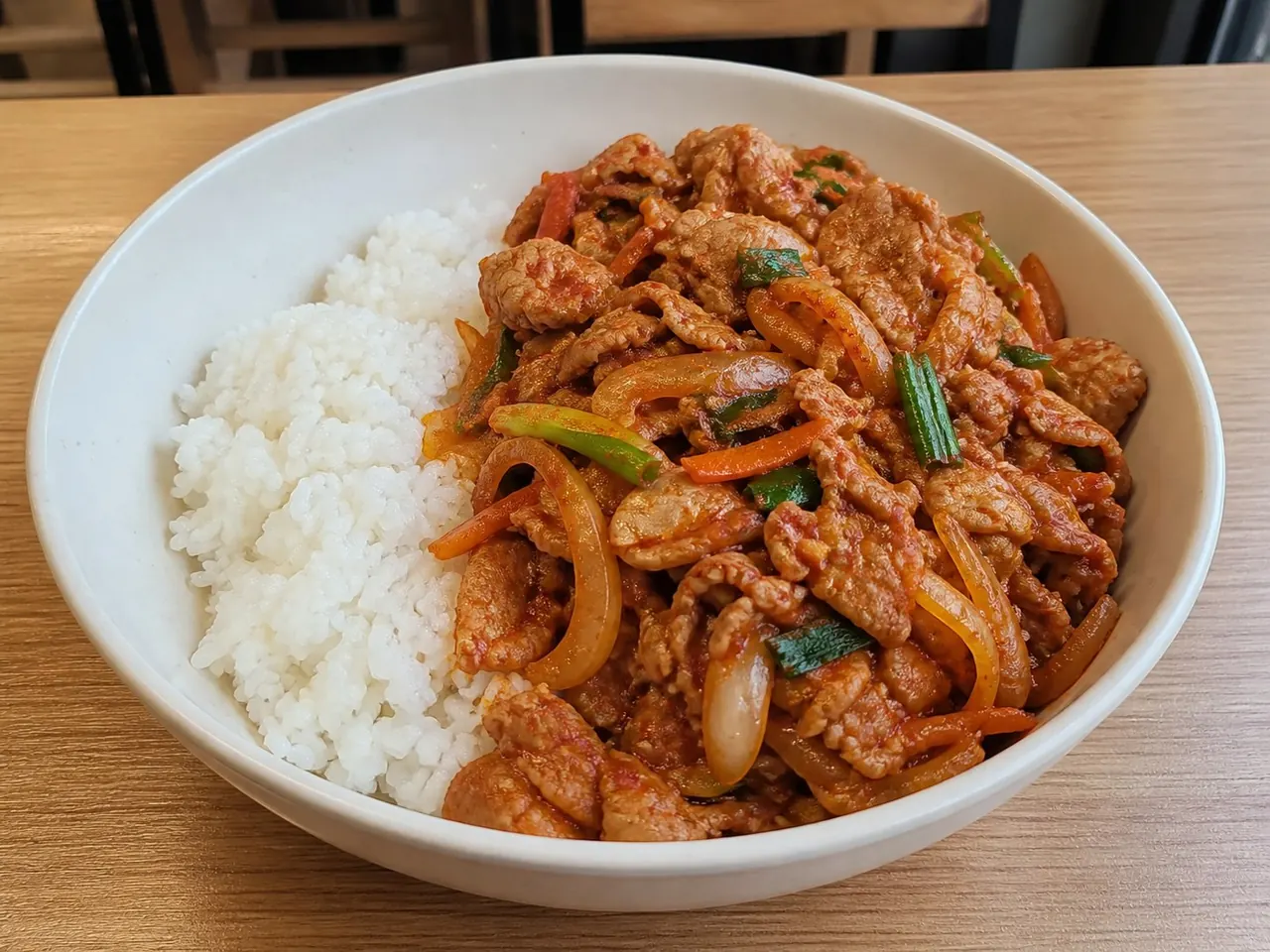
Jeyuk-deopbap with spicy stir-fried pork, onion and green onion beside white rice

제육덮밥 · Jeyuk deopbap

Jeyuk deopbap

제육덮밥

What exactly is it?

Jeyuk-deopbap is a one-bowl meal of thin pork shoulder, neck or front-leg slices stir-fried with onions, green onions and carrots in a gochujang and gochugaru sauce, then served over rice. The pork fat and sweet-spicy seasoning soak into the rice. Bean sprouts and shredded laver are not standard defining toppings; cabbage, perilla leaves or chili may vary by restaurant.

Main ingredients

Thinly sliced pork shoulder or front leg, rice, onion, green onion, carrot, gochujang, gochugaru, soy sauce, sugar, garlic

Ordering and serving

It normally arrives cooked as one bowl, convenient for a solo meal. Do not confuse it with a shared jeyuk-bokkeum order that may have a two-portion minimum. Mix it together or eat the pork with rice a bite at a time.

Origins and changes

Jeyuk refers to pork; on modern menus it usually means pork stir-fried with chili seasoning. Serving that stir-fry over an individual portion of rice makes jeyuk-deopbap. It is ordered and eaten differently from pork ribs grilled at the table.

Sources checked

Related foods

How do similar dishes compare?

Choose a dish to compare ingredients, flavor and serving style side by side.

Dish to compare

Jeyuk deopbap

제육덮밥

Main ingredients
Thinly sliced pork shoulder or front leg, rice, onion, green onion, carrot, gochujang, gochugaru, soy sauce, sugar, garlic
Flavor and character
Jeyuk-deopbap is a one-bowl meal of thin pork shoulder, neck or front-leg slices stir-fried with onions, green onions and carrots in a gochujang and gochugaru sauce, then served over rice. The pork fat and sweet-spicy seasoning soak into the rice. Bean sprouts and shredded laver are not standard defining toppings; cabbage, perilla leaves or chili may vary by restaurant.
How to eat it
It normally arrives cooked as one bowl, convenient for a solo meal. Do not confuse it with a shared jeyuk-bokkeum order that may have a two-portion minimum. Mix it together or eat the pork with rice a bite at a time.
Read about this dish →

Hoe-deopbap

회덮밥

Main ingredients
Rice, raw fish, lettuce, perilla leaves, cucumber, vinegared gochujang
Flavor and character
Raw fish and crisp vegetables are mixed with rice and sweet-tart vinegared gochujang. The texture comes from uncooked lettuce, perilla and cucumber rather than seasoned, cooked namul. The fish is raw, and the species depends on the restaurant and supply.
How to eat it
If rice arrives separately, add it to the fish-and-vegetable bowl. Add the sauce a little at a time. If you need to avoid raw fish, choosing an explicitly cooked dish is clearer than assuming the topping can be cooked on request.
Read about this dish →
Find nearby food places →

Check the restaurant’s actual menu for the dish you want.