
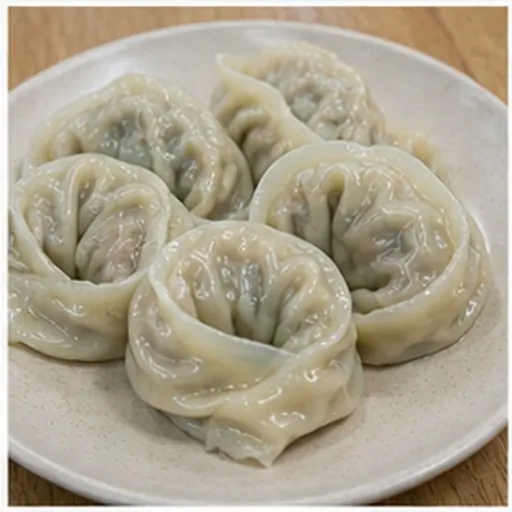
Korean-style serving of Steamed dumplings

찐만두 · Steamed dumplings

Steamed dumplings

찐만두

What exactly is it?

Steam cooks the wrapper until soft, without a fried surface. Thin skins may reveal the filling underneath. Meat and kimchi fillings are common, while portion sizes differ between shops.

Main ingredients

Dumpling wrappers with meat, tofu and vegetable filling; optional kimchi

Ordering and serving

Freshly steamed skins can stick and tear, so lift gently. Split a large dumpling on your plate to let the filling cool.

Origins and changes

Steaming is one of the established ways to cook mandu. A plate may be the main purchase at a dumpling shop or an accompaniment to cold noodles at a restaurant.

Sources checked

Related foods

How do similar dishes compare?

Choose a dish to compare ingredients, flavor and serving style side by side.

Dish to compare

Steamed dumplings

찐만두

Main ingredients
Dumpling wrappers with meat, tofu and vegetable filling; optional kimchi
Flavor and character
Steam cooks the wrapper until soft, without a fried surface. Thin skins may reveal the filling underneath. Meat and kimchi fillings are common, while portion sizes differ between shops.
How to eat it
Freshly steamed skins can stick and tear, so lift gently. Split a large dumpling on your plate to let the filling cool.
Read about this dish →

Dumplings

만두

Main ingredients
Wheat wrappers, minced meat, tofu and vegetables; optional kimchi or glass noodles
Flavor and character
A wrapper encloses fillings such as minced meat, tofu and vegetables. Meat and kimchi versions differ in seasoning, and dumplings can be steamed, fried or cooked in soup. Large wangmandu may have a thicker, bread-like outer layer.
How to eat it
Kimchi mandu does not necessarily contain only kimchi. Pork or seafood seasoning may be included; check even a vegetable-named dumpling if you avoid meat.
Read about this dish →
Find nearby food places →

Check the restaurant’s actual menu for the dish you want.