
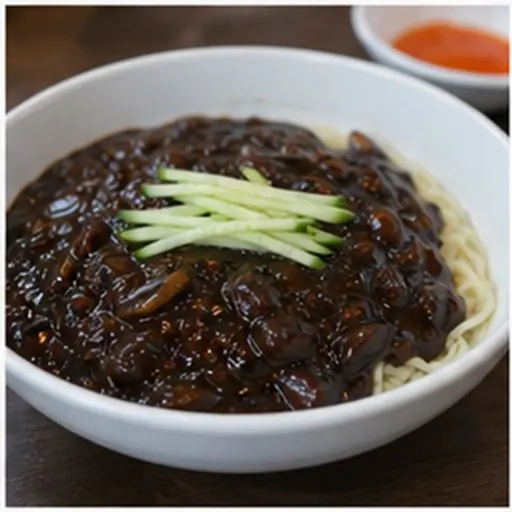
Jjajangmyeon with black-bean sauce

짜장면 · Jjajangmyeon

Jjajangmyeon

짜장면

What exactly is it?

Thick wheat noodles are mixed with a dark chunjang sauce containing stir-fried onion and pork. It is savory and sweet rather than usually chili-hot. The black color comes from the bean-paste-based sauce, not squid ink.

Main ingredients

Wheat noodles, chunjang (dark fermented paste), pork, onion, cabbage or zucchini, starch

Ordering and serving

Mix the sauce through the noodles; pickled radish and raw onion often come alongside. Pork is common even when vegetables dominate the sauce. Gopbaegi, written 곱빼기, requests a larger noodle portion.

Origins and changes

It developed in Korea from Shandong-style noodles with fried bean sauce brought through the port of Incheon. Korean chunjang and a sweeter, thicker, onion-rich sauce shaped the local version, which became a familiar restaurant and delivery meal.

Sources checked

Related foods

How do similar dishes compare?

Choose a dish to compare ingredients, flavor and serving style side by side.

Dish to compare

Jjajangmyeon

짜장면

Main ingredients
Wheat noodles, chunjang (dark fermented paste), pork, onion, cabbage or zucchini, starch
Flavor and character
Thick wheat noodles are mixed with a dark chunjang sauce containing stir-fried onion and pork. It is savory and sweet rather than usually chili-hot. The black color comes from the bean-paste-based sauce, not squid ink.
How to eat it
Mix the sauce through the noodles; pickled radish and raw onion often come alongside. Pork is common even when vegetables dominate the sauce. Gopbaegi, written 곱빼기, requests a larger noodle portion.
Read about this dish →

Ganjjajang

간짜장

Main ingredients
Wheat noodles, chunjang (dark fermented paste), pork, onion, cooking oil
Flavor and character
This jjajang variation uses a concentrated stir-fry of chunjang, onion and pork with little added water. Sauce often arrives separately from the noodles. It is less pourable and more onion-textured than ordinary jjajang; a fried egg is a restaurant variation.
How to eat it
Pour the separate sauce over the noodles and mix, loosening clumped strands with a little sauce first. The use of chunjang and pork means it is not automatically a dietary alternative to ordinary jjajang.
Read about this dish →
Find nearby food places →

Check the restaurant’s actual menu for the dish you want.