
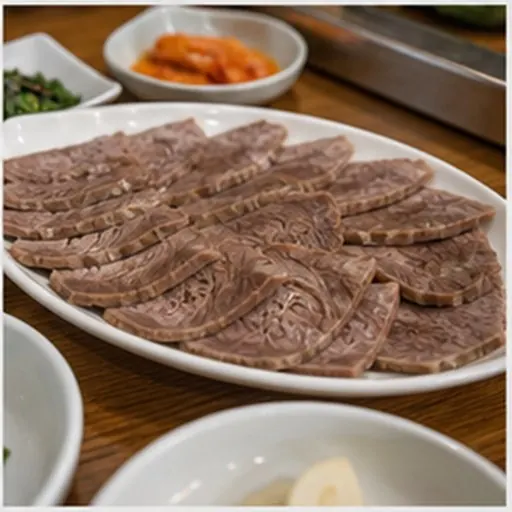
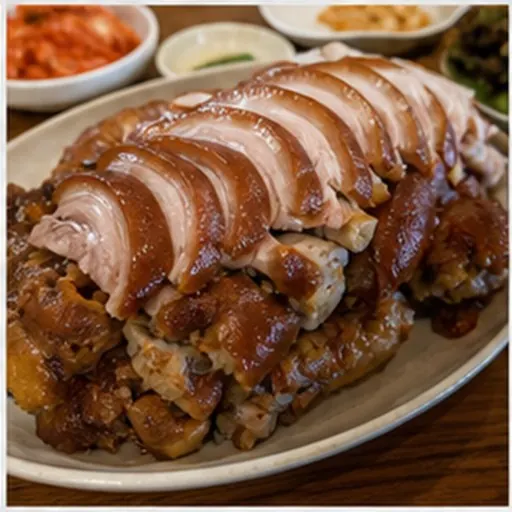
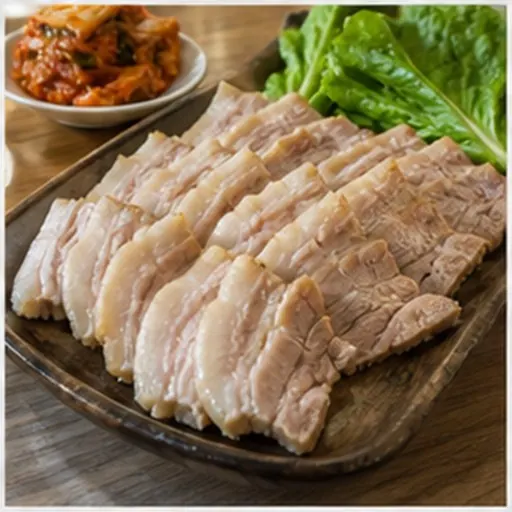
What exactly is it?
The name pyeonyuk (片肉) literally points to meat cut into thin pieces. Beef versions may be called suyuk-pyeonyuk and pork versions jeyuk-pyeonyuk. It is better understood as a preparation method than as one fixed cut of meat.
Beef brisket, shank, tongue and head meat, or pork belly, head and trotters may be used. Pressing the cooked meat while warm lets gelatin-rich connective tissue bind the pieces. Once chilled, it holds a neat shape and can be sliced thinly, often combining lean, fatty and springy textures in one piece.
How is it served?
Pyeonyuk is normally served thinly sliced, cool or near room temperature. Beef is traditionally paired with vinegared soy sauce or mustard sauce; pork is often served with salted fermented shrimp. Pork versions may also be wrapped in napa-cabbage kimchi or eaten with garlic, chili and ssamjang.
Market eateries and sundae-guk restaurants may serve pork-head pyeonyuk as a shared drinking dish. At Pyongyang-naengmyeon restaurants, beef pyeonyuk can appear as a noodle topping or a separate plate. Because the meat and portion vary widely, ask whether it is beef or pork and which cut is used before ordering.
Table and cultural context
Pyeonyuk made practical use of meat left after producing stock. It therefore appeared as a noodle topping, on banquet tables, at ancestral and holiday meals, and as anju served with alcohol. The Encyclopedia of Korean Culture also records brisket pyeonyuk, pork pyeonyuk and jokpyeon among dishes for a traditional 60th-birthday table.
Today a visitor is more likely to encounter it at a naengmyeon restaurant, traditional market, or sundae and gukbap shop. It can resemble European head cheese in the way collagen helps it set, but Korean pyeonyuk is not defined by one spice profile or cut; its sauces, kimchi and place in a shared Korean meal are central to the experience.
How it differs from suyuk, bossam and jokbal
Suyuk broadly means meat cooked by boiling and may be sliced and served warm. Pyeonyuk specifically emphasizes pressing, cooling and thin slicing. Bossam names a fuller way of eating boiled pork with kimchi and wraps, while jokbal is a separate soy-braised pig-trotter dish.
Restaurants do not always use these terms with textbook precision. Meorigo-gi (head meat), dwaeji-pyeonyuk and suyuk may arrive as similar-looking plates, so the menu name alone does not guarantee a specific cut.
Ordering and serving
Ask whether it is beef or pork and which cut is used. Check before ordering if you avoid head meat, trotters, tongue or offal, or if fermented shrimp is an allergen. It is often a shared plate, so solo diners should also confirm portion size and minimum order.