
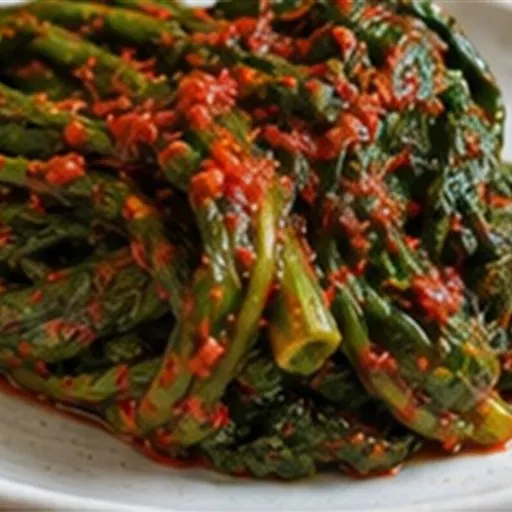
Korean-style serving of Green-onion kimchi

파김치 · Green-onion kimchi

Green-onion kimchi

파김치

What exactly is it?

Whole small scallions are chili-seasoned and fermented. Sharp raw-onion pungency softens with age, while long stems give a different bite from cabbage. Fish sauce often provides a concentrated savory base.

Main ingredients

Scallions, chili powder, fish sauce, garlic, ginger

Ordering and serving

Cut the long stems into manageable pieces. It may accompany black-bean noodles or meat, but already carries strong seasoning.

Origins and changes

Sasi chanyocho records scallions pickled in brine. The familiar fish-sauce-and-chili form developed later and has been associated with Chungcheong, Jeolla and Gyeongsang.

Sources checked

Related foods

How do similar dishes compare?

Choose a dish to compare ingredients, flavor and serving style side by side.

Dish to compare

Green-onion kimchi

파김치

Main ingredients
Scallions, chili powder, fish sauce, garlic, ginger
Flavor and character
Whole small scallions are chili-seasoned and fermented. Sharp raw-onion pungency softens with age, while long stems give a different bite from cabbage. Fish sauce often provides a concentrated savory base.
How to eat it
Cut the long stems into manageable pieces. It may accompany black-bean noodles or meat, but already carries strong seasoning.
Read about this dish →

Napa-cabbage kimchi

배추김치

Main ingredients
Napa cabbage, salt, chili powder, radish, garlic, scallion, often fermented seafood
Flavor and character
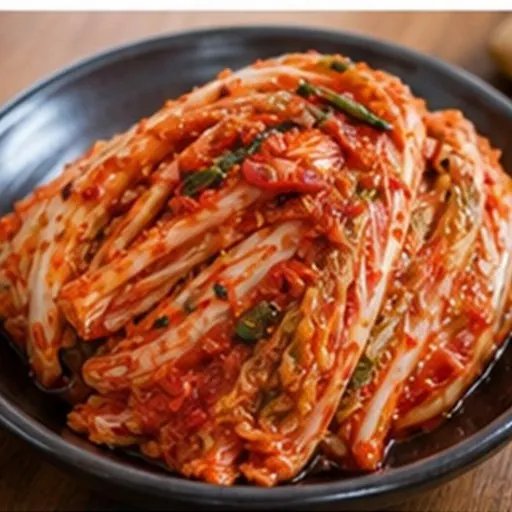
Salted napa leaves are filled with radish and chili seasoning, then fermented. Fresh kimchi is crisp and seasoning-led; acidity develops as it matures. Seafood seasoning and other additions differ between households and regions.
How to eat it
Eat small amounts with rice. For vegetarian kimchi, ask about fermented shrimp, fish sauce and oysters. Follow the restaurant’s policy on side-dish refills.
Read about this dish →
Find nearby food places →

Check the restaurant’s actual menu for the dish you want.