
Attraction
Jangchungdan Park
Jung
Korean name장충단공원
261 Dongho-ro, Jung-gu, Seoul (Jangchung-dong 2-ga)
Place story
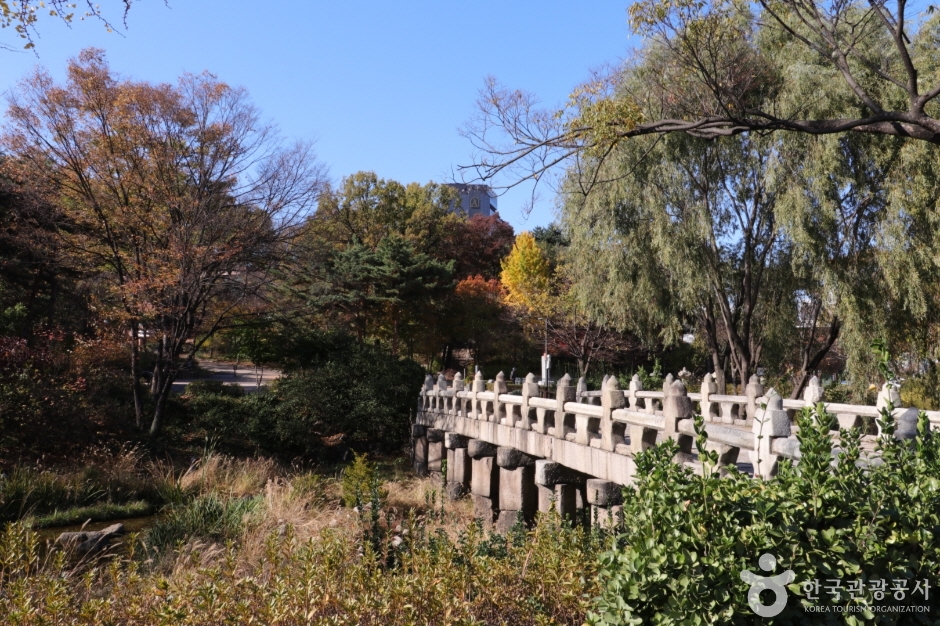
Jangchungdan Park is an ethnic park filled with patriotic loyalty related to the anti-Japanese movement. This park, located at the northeastern foot of Namsan Mountain, is the site of Namsoyeong, which guarded the southern part of the capital during the reign of King Yeongjo of the Joseon Dynasty. On August 20, 1895, an incident occurred in which Empress Myeongseong was assassinated at Gyeongbokgung Palace by Japanese assassins. At the time, many soldiers, including Minister of Palace Affairs Lee Gyeong-jik and Demonstration Leader Hong Gye-hoon, died while defeating the Japanese. Accordingly, Emperor Gojong built a shrine called Jangchungdan in November 1900 to comfort their spirits and held a memorial service every spring and autumn until 1908. Originally, Jangchungdan was located in the current location of the guesthouse of the Shilla Hotel. However, the shrine was destroyed during the Korean War, and only what remained of the shrine erected in Jangchungdan was moved to its current location in 1969. In 1919, the Japanese built a temple called Bakmunsa Temple and created a park at the site of Jangchungdan in order to destroy national spirit, but it was all demolished after liberation. On September 22, 1984, Jangchungdan Park, which became a neighborhood park, was absorbed and merged as part of Namsan Park, a natural park. The remaining area is still called by its old name, Jangchungdan Park. The area of Jangchungdan Park contains cultural assets such as the Jangchungdan Monument, Supyogyo Bridge, Seungjeongjeon Hall, Gwanseongmyo, and Waryongmyo, as well as the March 1st Movement Monument, the Korean Confucian Independence Movement Paris Jangseobi, Manhae Han Yong-un's monument, and statues of Yu Gwan-sun, Lee Jun, and Kim Yong-hwan.
Read the Korean source description
장충단공원은 항일운동과 관련된 애국충정이 깃든 민족공원이다. 남산의 동북쪽 기슭에 있는 이 공원은 조선 영조 때 도성의 남쪽을 수비하던 남소영이 있던 자리이다. 1895년 8월 20일, 명성황후가 일본의 자객들에 의해 경복궁에서 시해당하는 사건이 발생했다. 당시 궁내부 대신 이경직, 시위대장 홍계훈 등 많은 장병이 일본인들을 물리치다가 죽음을 맞았다. 이에 고종 황제는 그들의 영령을 위로하고자 1900년 11월 장충단이라는 사당을 짓고 1908년까지 매년 춘추로 제사를 올렸다. 원래 장충단은 지금의 신라호텔 영빈관 자리에 있었다. 그러나 사당은 한국전쟁 중 소실되었고 장충단에 세워졌던 비만 남아 1969년 현재의 자리로 옮겨졌다. 1919년 일제가 민족정기를 말살하기 위해 박문사라는 절을 세우고 장충단 자리에 공원을 조성했는데, 광복 후 모두 철거되었다. 1984년 9월 22일 근린공원이 된 장충단공원은 자연공원인 남산공원의 일부로 흡수, 합병되었다. 나머지 구역은 장충단공원이라는 예전의 이름 그대로 불리고 있다. 장충단공원 일대는 장충단비, 수표교, 승정전, 관성묘, 와룡묘 등 문화재를 비롯하여 3·1운동 기념비, 한국유림독립운동파리장서비, 만해 한용운 시비와 유관순, 이준, 김용환 선생 동상 등이 있다.
Source content updated: